
Cruciate Ligament Injuries & TPLO Surgery
The Cranial Cruciate Ligament
The cranial cruciate ligament plays a vital role in stabilising your dog’s knee. It prevents the tibia (shin bone) from sliding forwards in relation to the femur (thigh bone) when the dog bears weight on the leg.
When the cranial cruciate ligament becomes damaged or ruptures, the knee becomes unstable. This can cause pain, inflammation, and ongoing damage within the joint, and can ultimately lead to the development of arthritis.
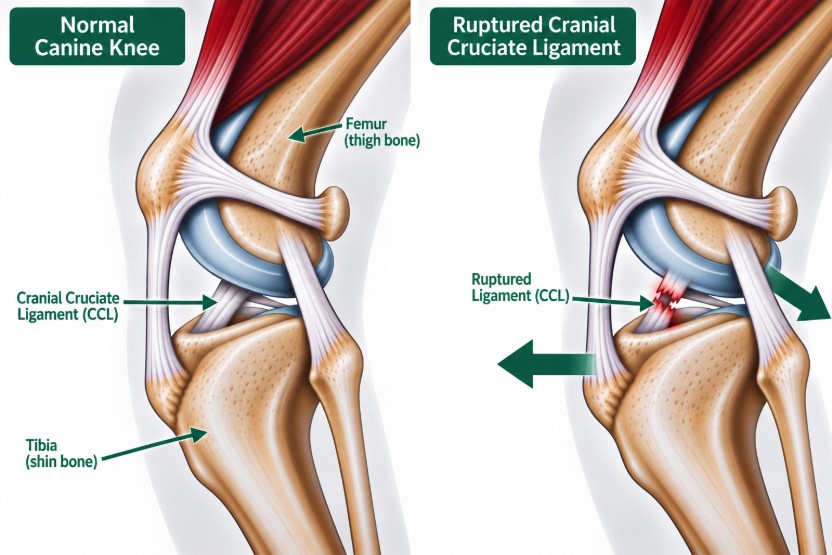 Unlike a simple traumatic injury, cranial cruciate ligament disease in dogs is often the result of gradual degeneration of the ligament. This means a rupture can occur during something as ordinary as running, jumping or simply changing direction, without any obvious accident or injury.
Because dogs cannot tell us when they are in pain, the signs can sometimes be subtle. You may notice a limp, stiffness after rest, difficulty getting up, reluctance to exercise or a change in the way your dog sits or walks. Some dogs will continue to use the affected leg despite significant discomfort.
Why Intervention Is Important
Once the cranial cruciate ligament is damaged, instability within the knee can cause ongoing inflammation and abnormal movement of the joint. The meniscus, a cartilage cushion between the knee bones, can also become damaged as the joint moves abnormally.
Without appropriate treatment, this ongoing instability can contribute to progressive osteoarthritis, muscle loss and chronic pain.
Early veterinary assessment is therefore important if you notice any changes in your dog’s mobility. Not every cruciate injury requires surgery, and treatment recommendations depend on factors such as your dog’s size, age, activity level, degree of instability and overall health. For dogs requiring surgical stabilisation, TPLO is one of the most commonly performed and successful surgical techniques.
The TPLO Technique
The Tibial Plateau Levelling Osteotomy (TPLO) is a surgical procedure designed to stabilise the knee by changing the angle of the top of the tibia.
Before surgery, detailed X-rays are taken to assess the anatomy of the knee and measure the “slope” at the top of the tibia (tibial plateau angle). This information allows the surgical procedure to be carefully planned for each individual patient.
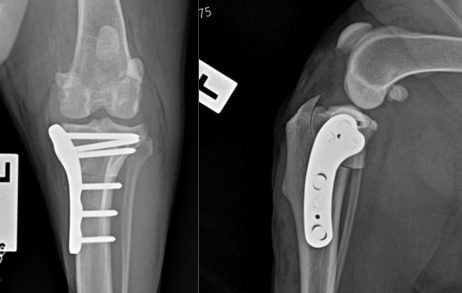
During a TPLO, a curved cut is made through the upper portion of the tibia. This section of bone is then rotated to alter the angle of the tibial plateau. Once the desired position has been achieved, the bone is secured using a specialised bone plate and surgical screws.
By changing the mechanics of the knee, TPLO reduces the instability caused by the damaged cranial cruciate ligament and allows the limb to function more normally during weight-bearing.
The Pet Universe Difference
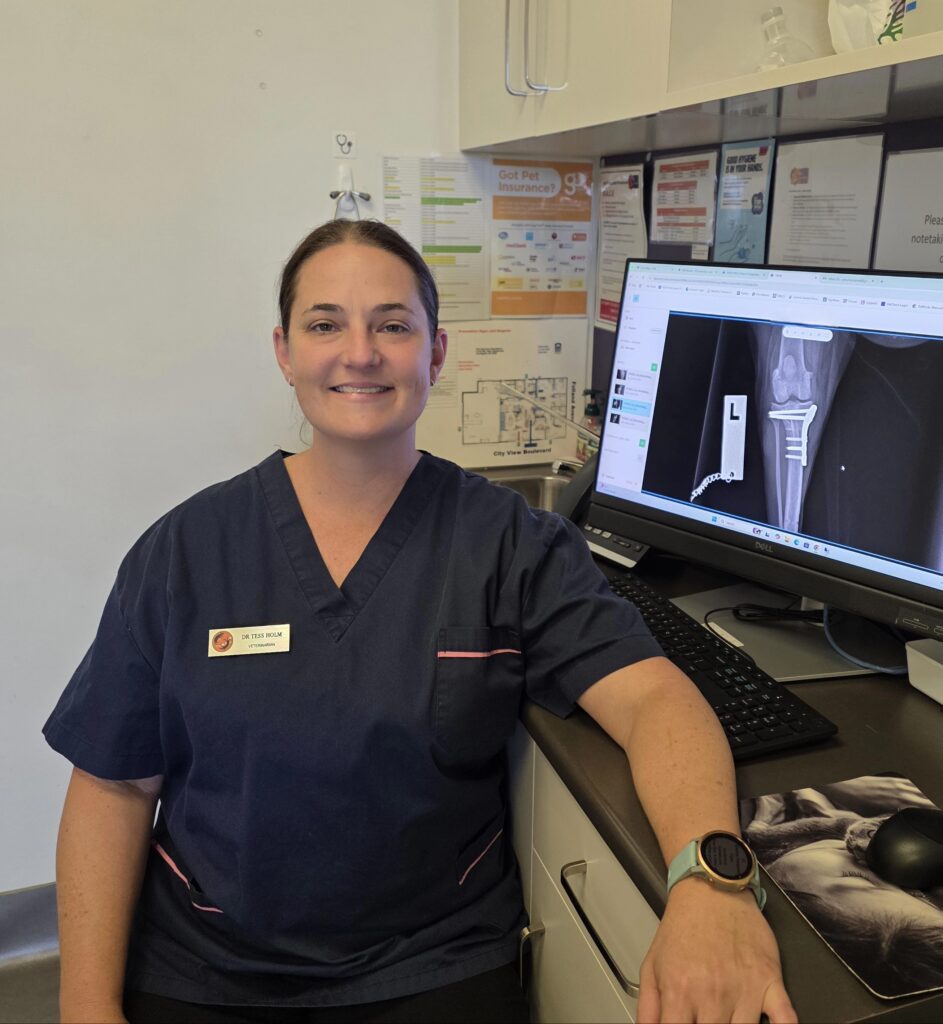
At Pet Universe, TPLO surgery is performed as a dedicated day procedure by Dr Tess Holm, who has over 25 years of experience in small animal practice and is a member of the Australian and New Zealand College of Veterinary Scientists (ANZCVS) in Small Animal Surgery.
TPLO is a technically demanding orthopaedic procedure, and we believe every patient deserves our full attention. For this reason, we schedule only one TPLO surgery per day. This allows our veterinary and nursing team to focus completely on your pet from admission through to discharge.
Your dog will have a dedicated nurse involved in their care throughout the day. Our experienced nursing team includes nurses with further training and experience in anaesthesia, analgesia and orthopaedic nursing.
From preparing your pet for surgery and closely monitoring their anaesthetic, through to recovery and discharge, our team is there every step of the way.
Keeping Your Pet Comfortable
TPLO is a significant orthopaedic procedure, so effective pain management is a very important part of your pet’s care.
At Pet Universe, we use a multimodal approach to pain management, combining different medications and techniques to provide effective pain relief throughout the anaesthetic, surgery and recovery period.
Depending on your pet’s individual needs, pain management may include an epidural or regional nerve block, continuous rate infusion of intravenous pain relief, slow-release opioid patch and appropriate anti-inflammatory medication.
Our aim is to keep your pet as comfortable as possible throughout their stay and to provide a smooth transition from surgery to recovery at home.
Supporting You Through the Journey
We understand that your pet needing orthopaedic surgery can be stressful for the whole family. Our goal is not only to achieve the best possible surgical outcome for your dog, but also to support you throughout the entire process.
Our team will explain what to expect before surgery, answer your questions and provide clear instructions for caring for your dog at home. We will continue to monitor your pet’s progress during their recovery and are always available to provide guidance and reassurance along the way.
And, of course, there will be plenty of pats and cuddles along the way too!
The Recovery Process
Successful recovery following TPLO surgery requires patience and careful management at home.
The bone needs approximately eight weeks to heal adequately following the osteotomy. During this period, your dog’s activity must be carefully restricted to protect the healing bone and surgical repair. Running, jumping, rough play and off-lead activity are not permitted during the early stages of recovery.
However, controlled lead walking can generally begin from around two weeks after surgery. This is good news for both you and your dog — they can get out in the fresh air, explore a little and avoid going too stir-crazy at home!
From this point, walks are gradually increased in a controlled way. This progressive exercise is an important part of rehabilitation, helping to rebuild muscle strength, improve mobility and restore normal use of the leg — while still protecting the healing bone.
We schedule post-operative examinations throughout the recovery period to monitor healing, assess comfort, and adjust your dog’s rehabilitation plan as required.
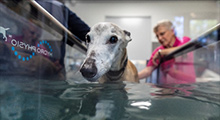
At Pet Universe, we also have dedicated rehabilitation therapists and a rehabilitation facility to help your pet regain strength, mobility and confidence following surgery.
Recovery is a team effort, and we are here to support you and your dog every step of the way.